Reviewed by [INSERT: Name], Florida Regional Lead — [INSERT: X years] cleaning and sealing pavers across Florida's coastal and estate communities.
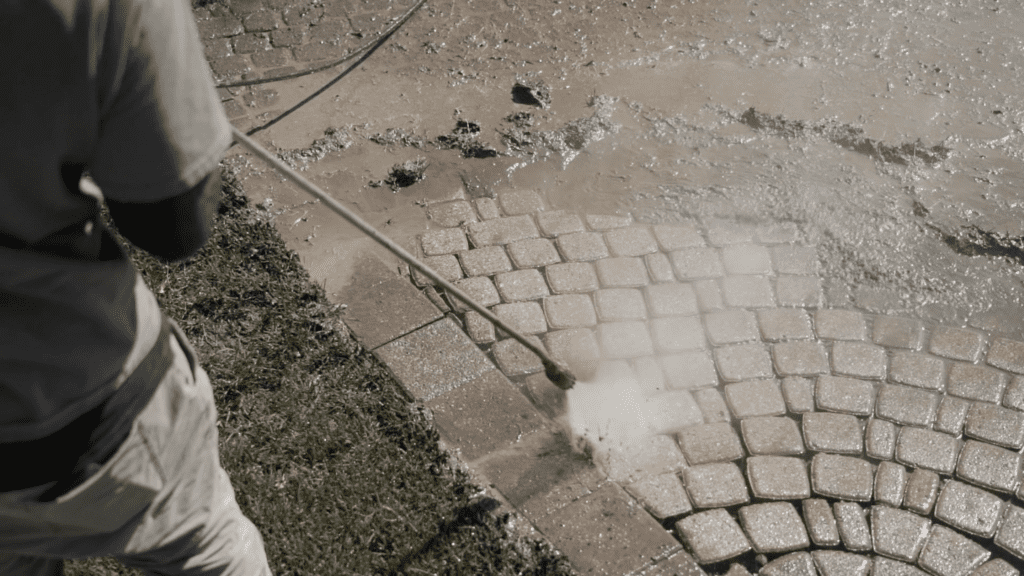
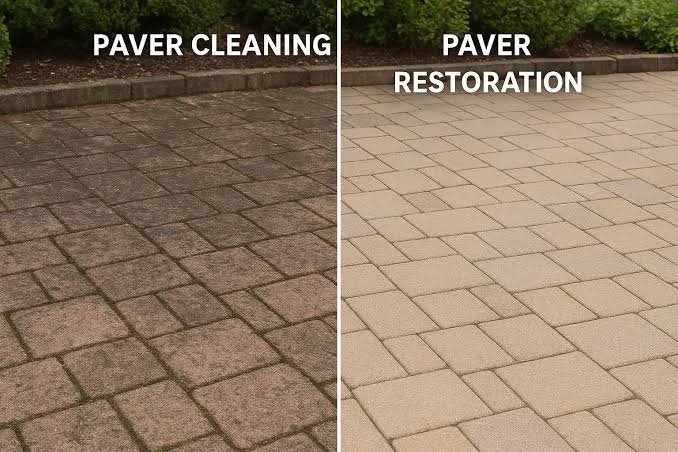
Florida's humidity accelerates algae and mold growth on unsealed pavers, while intense UV exposure fades sealer and paver color faster than in most other states. Salt air along the coast adds mineral staining and joint-sand erosion on top of that. Hank Robotics provides professional paver cleaning and sealing across 10 priority Florida markets, using pressure washing calibrated to paver material and sealers matched to each community's specific exposure.
Rather than a broad, thin statewide footprint, we've concentrated on the coastal, waterfront, and estate communities where paver driveways, patios, and pool decks are large, high-value, and most exposed to the conditions that break sealer down.
Our Priority Florida Markets
Each market below is served around that location's dominant paver condition — the exposure that determines how the surface is cleaned and which sealer holds up.
| # | Market | Dominant Paver Condition |
|---|---|---|
| 1 | Palm Beach | Oceanfront salt staining, estate-scale driveways |
| 2 | Coral Gables | Canopy shade mold/algae on brick pavers |
| 3 | Miami Beach | Open-water salt, modern paver-deck architecture |
| 4 | Pinecrest | Large-lot driveways, irrigation mineral staining |
| 5 | Jupiter | Inlet salt + marina-adjacent paver decks |
| 6 | Boca Raton | Canal humidity, mixed driveway/patio paver types |
| 7 | Key Biscayne | Barrier-island humidity, year-round algae pressure |
| 8 | Golden Beach | Dual-exposure salt on oceanfront/Intracoastal pavers |
| 9 | Fort Lauderdale | Canal-system humidity, sealer chemistry matters |
| 10 | Wellington | Paddock dust on brick/travertine estate pavers |
Nine of our ten priority markets sit on or near ocean, bay, or canal water — where salt and humidity attack sealer and joint sand fastest. Wellington is the deliberate inland outlier, where paddock dust and travertine estate pavers, not salt, drive the dominant condition.
Why Florida Pavers Need Cleaning and Sealing, Not Just Cleaning
Salt air (coastal markets)
(Palm Beach, Miami Beach, Jupiter, Golden Beach, Fort Lauderdale, Boca Raton, Key Biscayne) — Salt accelerates joint-sand erosion and leaves mineral staining on driveways and patios near the water. A clean alone doesn't stop it re-forming; the right sealer does.
Humidity (canopy & waterfront markets)
(Coral Gables, Key Biscayne, Fort Lauderdale, Boca Raton) — Florida's humidity creates ideal algae and mold conditions on unsealed, porous paver surfaces, especially under shade canopy and along canals.
UV exposure (all markets)
Intense year-round sun fades paver color and breaks down unsealed surfaces faster than in less sun-intensive climates — which is why sealing, and periodic resealing, matters statewide.
What's Included, Across All 10 Markets
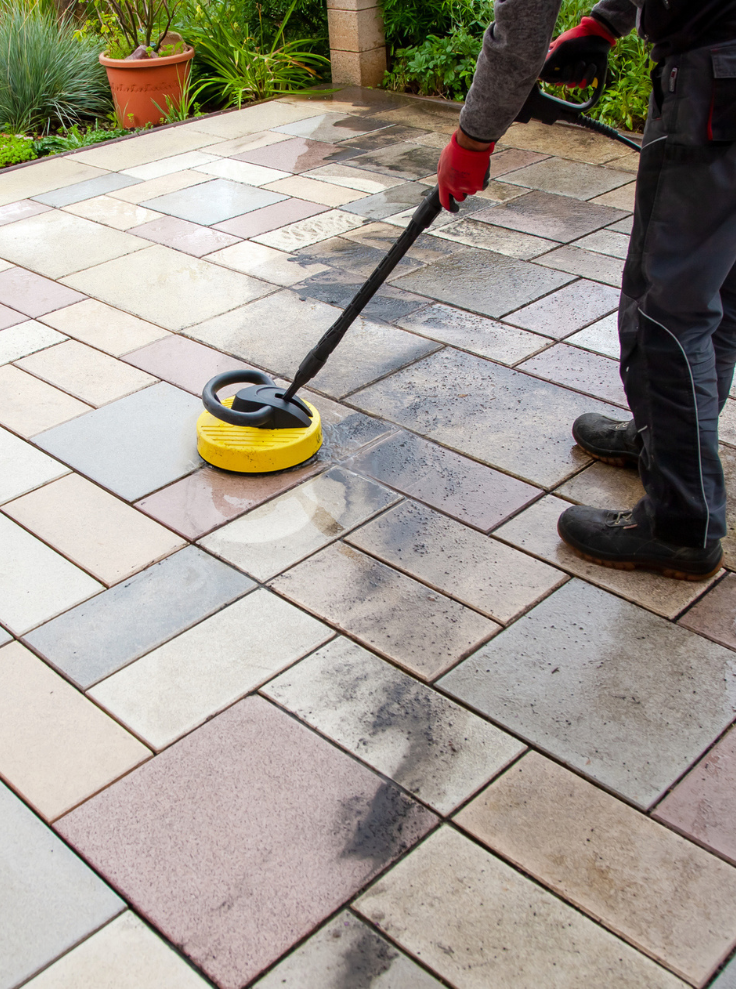
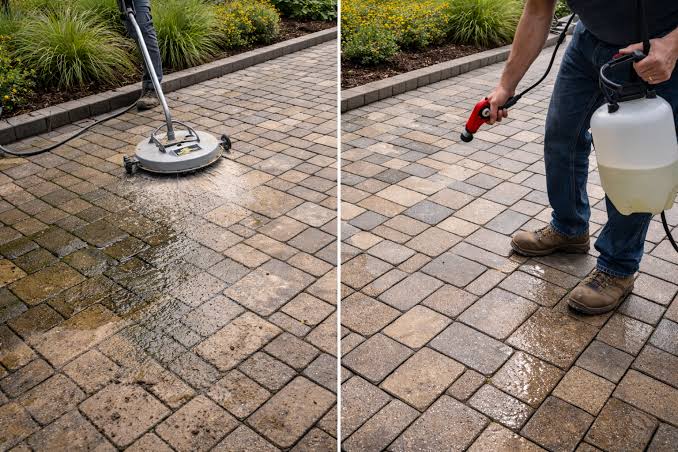
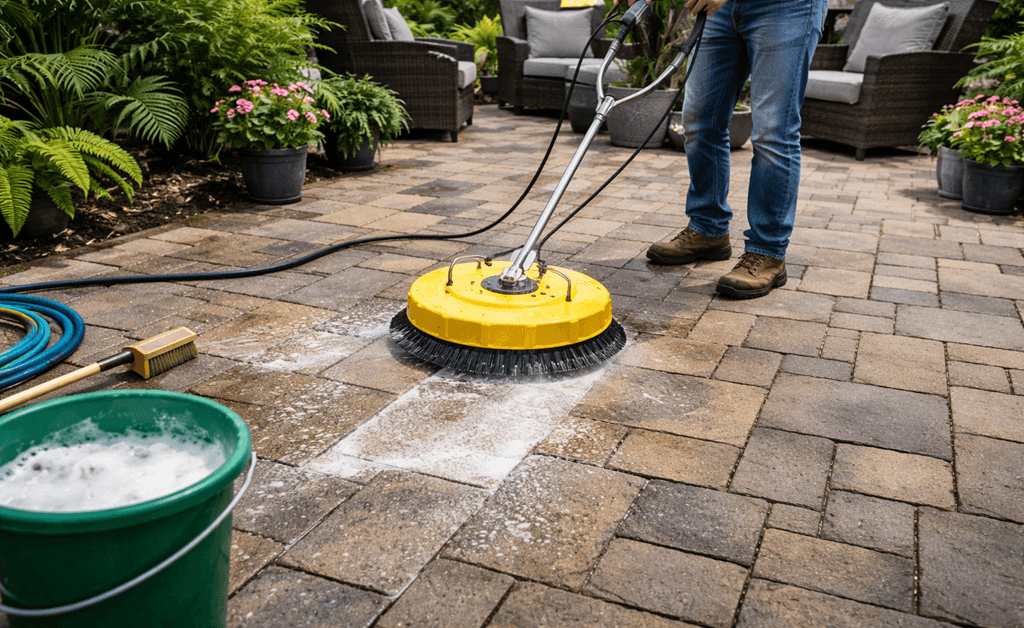
- ▸Pressure washing calibrated to paver material — brick, concrete, or travertine
- ▸Weed removal and joint-sand treatment
- ▸Polymeric sand re-application to lock joints and resist erosion
- ▸Sealer matched to the market's dominant exposure — salt-resistant, mold-resistant, or UV-resistant formulations
- ▸Final walkthrough on driveways, patios, and pool decks before we leave
Florida Paver Cleaning and Sealing Cost
Pricing depends on square footage, paver material, and sealer type. Starting rates begin around [INSERT: $X] for a standard driveway or patio; larger estate properties are quoted individually.
Florida FAQs
How much does paver cleaning and sealing cost in these Florida markets?
Starting around [INSERT: $X], varying by square footage and exposure type — each market has location-specific detail.
How often should Florida pavers be resealed?
Every 2–3 years generally, tighter for direct-coastal properties given salt exposure.
Do you serve driveway and patio pavers in all 10 markets?
Yes, both are core services across every market listed.